A Reader’s Map for Following a Public Consultation
Follow a public consultation from its opening question to its stated next steps, so you can see how responses are handled and where to check the outcome.
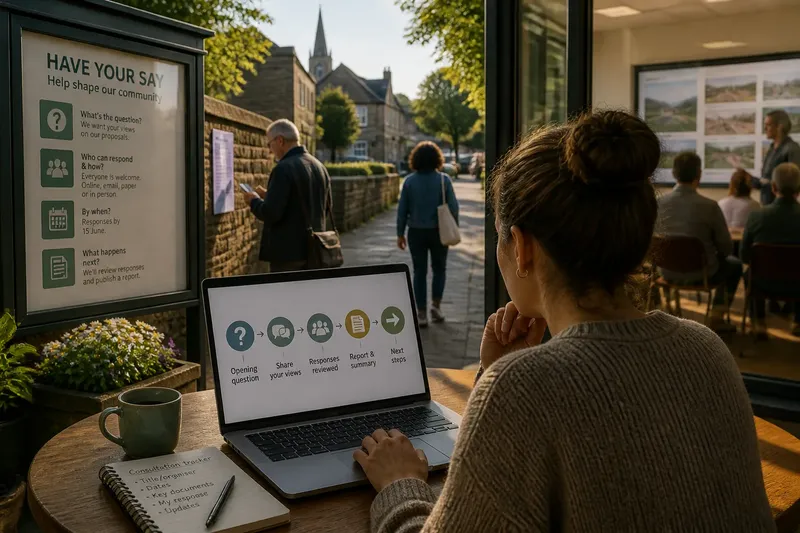
What happens to the comments you send to a public consultation? Follow the consultation from its opening question to its stated next steps, and you can see what the organisation asked, how it says it will handle responses and where it will report the outcome.
What is the public consultation asking?
Start with the question the authority or organisation has put to the public. It may be asking about a problem, possible options, a draft plan or details of a proposal. Those are different tasks, even when the same word—consultation—is used.
Find the consultation document, notice or official webpage that explains its purpose. Identify the decision or issue under discussion, then check what remains open to influence. A consultation about a new service location might invite views on several sites. One about a draft policy might ask for comments on particular clauses. Neither necessarily means every part of the proposal is undecided.
Separate the central question from background information and promotional language. Note any stated limits, such as a legal duty, an existing decision or a fixed boundary for the work. These help explain why some comments may be relevant to the process while others fall outside its stated scope.
Also distinguish consultation from other forms of public involvement. The organisation might be gathering information, inviting comments on a proposal or asking people to choose between options. If the notice is unclear, record the uncertainty. Do not treat the invitation as a promise of a vote or a veto.
Who can respond and how?
Read the invitation for its intended audience, response routes and closing date. Some consultations invite anyone to respond; others also seek input from particular groups or affected communities. The available routes may include an online form, email, a paper response or an in-person event.
Check whether there are accessible ways to take part. Look for alternatives to an online form, information in other formats or languages, and instructions for requesting an adjustment. If the only route is difficult for you to use, contact the organiser and ask what alternatives are available.
Notice what the form asks you to provide. Set questions can help organise responses, while an open text box may let you raise a point the questions miss. If you respond, answer the question asked, explain your reasoning and identify the part of the proposal your comment concerns. That gives the organiser a clearer account than a general expression of support or opposition.
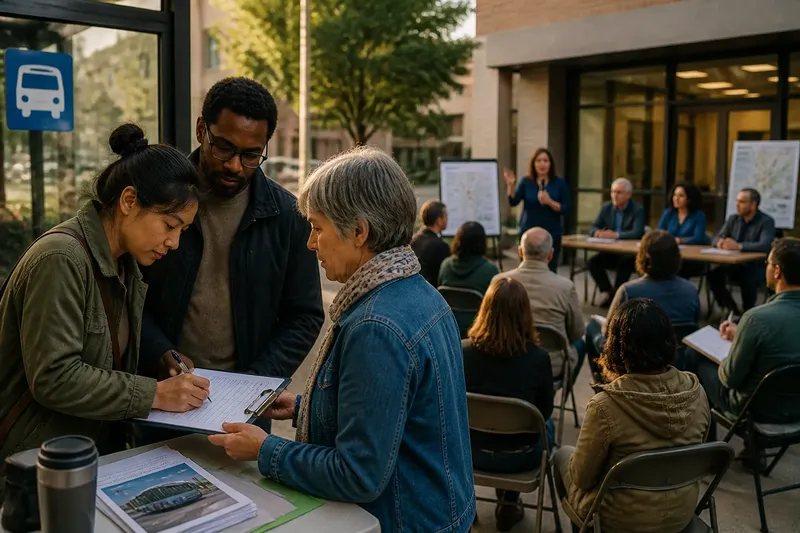
A public meeting may not be the formal response route. It could be intended to explain the proposal or prompt discussion, while the organisation asks people to submit views separately. Check how comments from the event will be recorded and whether you also need to send a written response.
How can you tell what the response period covers?
Find the opening and closing dates, then check whether they apply to every response route. The invitation may give written submissions a deadline while arranging events separately. If a deadline is close or an online form is unavailable, contact the organiser promptly and keep a note of the reply.
Find the documents that define the period: the proposal, supporting material, question list and explanation of how feedback will be handled. Read the material related to the question you want to answer. You need not treat every attachment as equally relevant, but do not rely on a short summary if the detail affects your point.
Check the official consultation information for any process-specific label, instruction or local rule. The scope and handling of responses can vary, so a notice from another organisation may not describe this consultation.
Keep a simple record of the consultation title, organiser, dates, link to the main documents and any update that changes the invitation. This helps you distinguish the current version from an old notice shared in a message or saved in your browser.
What happens to responses after the deadline?
Look for an explanation of how comments will be considered and reported. The organisation may say it will group or summarise responses, identify themes or publish a report. It may also explain whether individual comments will appear publicly, be anonymised or be handled another way.
Do not treat a response count or summary as a direct measure of what everyone thinks. People who choose to respond are not necessarily representative of everyone affected. A summary tells you what the organisation says it heard; it does not, by itself, show how much influence a particular view had.
Check how the process says it will handle conflicting views. A report might record support for one option alongside concerns about its effects. It can show what people raised without showing that the organisation adopted the most common position.
Say you comment on a proposed change to a neighbourhood service, explaining that the draft leaves access unclear. The organiser later publishes a summary listing access among the concerns and says it will review the issue. You can trace your point through the process, but that wording alone does not tell you what the final decision will be.
How do you recognise the next step without assuming the outcome?
Follow the organisation’s own account. A stated next step might be to analyse responses, revise a draft, make a recommendation, return to a committee or publish a decision. These are actions in a process; they are not all decisions about the proposal itself.
Look for who is responsible for the next action and when or where an update is expected. If the organisation names a decision-making body, check whether it says that body will consider the consultation report or make the decision. That distinction shows where public input enters the wider process.
Compare later updates with the original question. Has the organisation addressed the issue it invited people to discuss? Has it explained a change to the proposal, or why it is proceeding without one? If an update only announces a result, look for the accompanying reasons or report before concluding how responses were treated.
It is not worth inferring influence from the tone of a press release or from whether your preferred option appears in a headline. Those clues can be thin. The more useful record is the stated question, the response summary, the decision and the explanation connecting them.
Which questions help you check a consultation’s progress?
Where can I find the official consultation documents?
Start with the organiser’s consultation page or the notice that invited responses. Save the main question, supporting documents and later updates from that source so you can distinguish official information from a repost or commentary.
Can I still respond after the closing date?
Check the invitation and contact the organiser if the deadline has passed or the response route failed. The organiser can tell you whether late comments may be accepted, but do not assume they will be included in the same way as responses sent during the stated period.
Does a consultation mean the organisation must follow the majority view?
Not on its own. A consultation gathers and considers input; the notice or applicable process explains the role of that input, while the final decision may involve other duties or considerations.
What should I look for after submitting a response?
Look for a response summary, report, meeting papers or decision notice that refers to the issues raised and identifies what happens next. If no update appears when expected, ask the organiser whether the timetable has changed and where the outcome will be published.
How can you keep a useful record of the process?
Use a short note rather than trying to reconstruct the consultation later. For each item, check the published information and choose an action based on what you see:
- The question: Check what issue or proposal the organisation asked about. If the question is clear, record it in the same terms; if it is unclear, ask the organiser what issue responses should address.
- The scope: Check what was open to comment and what limits the notice stated. If the limits are explicit, note them; if they are missing or ambiguous, seek clarification before assuming a subject is in scope.
- The invitation: Check who could respond, which routes were offered and the stated deadline. If a route works for you, use it; if it does not, ask about an alternative rather than assuming none exists.
- The handling: Check what the organisation said it would do with responses. If it explains how they will be considered, record that process; if it does not, ask how comments will be used.
- The report: Check where the organisation describes the views received. If a report is available, save its location and note the themes; if it is not, check the stated publication plan or ask where an update will appear.
- The next step: Check who was due to act and what update followed. If the named action has happened, record the update; if it has not, ask whether the timetable has changed.
- The explanation: Check whether the final account connects the input to the decision or explains why the proposal did not change. If it does, note the stated reasoning; if it does not, ask where the reasons for the decision are recorded.
Keep the note factual. Write “the report lists access as a concern” rather than “the organisation ignored the responses” unless the published record supports that claim. If a key link disappears or a document is replaced, note what you can still verify and ask the organiser for the current version.
Following a public consultation is not the same as predicting its result. Keep the original question beside each later update and check whether the organisation explains the movement from invitation to response and from response to action. That record gives you a sound basis for a focused follow-up if the stated next step remains unclear.